Once skeptical, the American and European car markets have gradually embraced Japanese imports and brands alike. Impressing beyond their domestic market, automakers like Honda, Toyota, and Nissan – nowadays big market names – are very reliable. Many have noted that Japanese carmakers have historically been associated with manufacturing long-lasting and durable vehicles.
With the passage of time, the quality gap between Japanese vehicles and their American counterparts has narrowed. Yet, with that keen reputation for reliability, Japanese cars are still a firm and popular favorite amongst drivers.
So, why are Japanese cars so good? Better yet, why exactly are Japanese cars so reliable?
1) Reliability
According to many recent, and past, surveys, Japanese cars are almost synonymous with reliability. It’s an association that drives many to purchase vehicles from a Japanese brand like the Mazda MX-5 – and even more to praise their vehicles. What initially felt like a car cult, the prowess of Japanese auto making has maintained a popular reputation; some collect cars, others embrace the everyday reliability of their Japanese model.
Where did this reputation for reliability come from?
Why Are Japanese Cars So Reliable?
American and European markets have long benefitted from the effective production model pioneered by Henry Ford and his assembly-line efficiency. Yet, Japanese efficiency can’t be captured by the conventional assembly line. Instead, production techniques have, in many cases, challenged and rivaled established industry practices.
In a post-war Japan, lacking capital investment and finite resources shaped a more frugal construction practice. As a result, the arrival of Just-in-time (JIT) manufacturing answered to these struggles and offered a roadmap to efficiency, whilst making the cars increasingly more reliable. Primarily developed through Toyota (as the Toyota production system), this leaned out production method in Japan and has two objectives: to quicken production phases, whilst responding to demand from buyers.
Nowadays, these techniques have been advanced as “lean” manufacturing, learning from the frugality of past eras in Japanese production history. These sharp techniques focus on productivity and reliability, which can feel different from the wasteful outlook of other industry practices. The result is a cherished reputation between Japanese vehicles and their reliability.
2) Technically Better Cars
Though defined by early success, reports in 1983 appeared in popular trade paper The New York Times, which published about the perceived wisdom of Japanese efficiency. Noticeably, the techniques of Japanese assemblies were thought to be impressive. Increasing automation changed the roles of manual labor and smaller inventories have refocused how materials are used. The outcome balances a low cost against a higher quality and value that sets benchmarks for outside competition.
Yet, it’s the attention to detail that testifies to why Japanese cars are better. The process is so finely tuned that it detects and corrects mistakes as part of a car’s efficient assembly. Where manual labor is more thoughtful, comfort and care goes into every car. Nowadays, Japanese assemblies represent a balance between robotic automation and a human touch.
3) Cultural Values
An invisible force that shapes car manufacturing is the culture of Japan. Many have noticed that car culture, and manufacturing, in Japan resonates with a sense of punctuality and care. An early system built on frugality, Japanese cars had to be made with prudence in mind. Since then, car manufacturing in Japan has always felt like a source of national pride.
Yet, there’s an enthusiasm that’s infectious. A whip of noise, a darting of color – modified cars and Japanese imports feel, at time, like one in the same. In Japan, a hashiriya shares it meaning with a street racer, a common scene for UK imports of Japanese performance cars.
4) Manufacturers
This association with reliability is often why Japanese cars are the best, according to experts and research alike. Indeed, reliability is in the top-ranking frequent questions people are likely to ask before purchasing a new car. Reliability lists, whether by models or manufacturers, are often testifying to Asian cars.
These top ten lists are littered with Japanese brands and include all the favorites – Lexus, Toyota, Suzuki, Subaru, Mitsubishi, Nissan and Mazda.
So, why are Japanese cars so good?
A careful cocktail of culture, technique and history has slowly captured the enduring reliability of Japanese car manufacturing. It’s never been a fading fashion either, but rather Japanese cars have long been the example of tunable car craft for the better. There’s little competition when it comes to Japanese cars. The rest is just noise.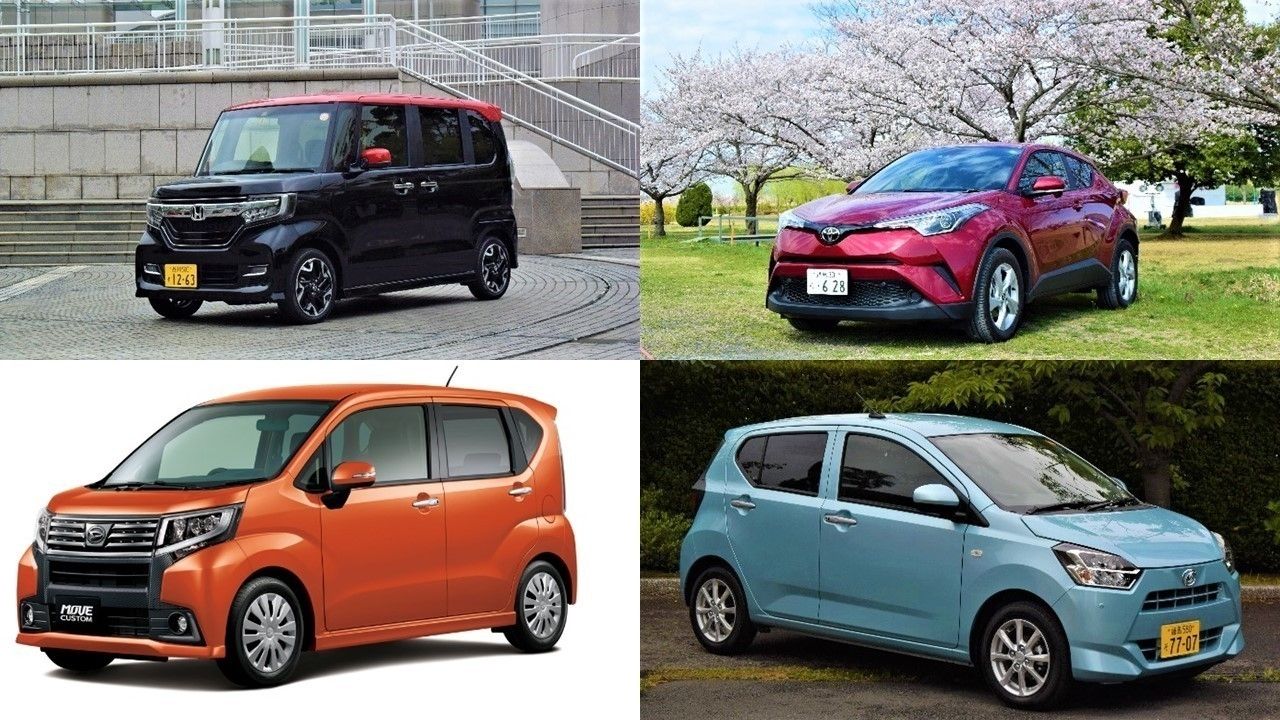
2011 Mercedes-Benz ML63 Gray Interior Detail Studio
1937 Cord Supercharged 812 Phaeton Blue Profile View On White Seamless
1938 Bugatti Type 57SC Corsica Convertible Black Profile View On White Seamless
2013 Infiniti Q56 SUV Silver-Green Interior Detail In Studio

Maserati Birdcage Pininfarina 75th Anniversary White 3/4 Front On Grass By Water
Model E Ironman Concept Car Head On Shot On Purple Floor Studio
2005 Spyker C12 La Turbie Spyder Gray Profile View On Red Floor Checkered Line Studio

2008 Aptera Typ-1 Prototype Hybrid Vehicle White Door Open 3/4 Front View On Pavement

2010 Honda Fit Sport Silver 3/4 Front Studio

2010 Honda Insight Blue Detail At Gas Station
2014 Honda Fit EV 5-Door Hatchback 3/4 Rear In Studio
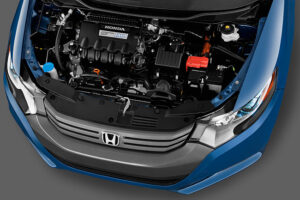
2011 Honda Insight EX-L Blue Engine Detail Studio

2014 Honda Accord Hybrid 4-Door Sedan 3/4 Front View In Studio

2014 Honda Accord Hybrid 4-Door Sedan 3/4 Rear View In Studio
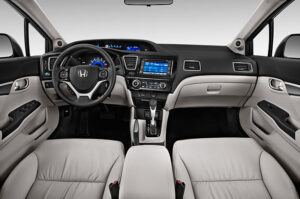
2015 Honda Civic Sedan EX L Auto 4-Door Interior Detail

2011 Honda CRZ EX Sport Hybrid Coupe Black Front View On White Seamless

2010 Honda Insight Blue 3/4 Front View On Pavement By Lake

2010 Honda Fit Sport Silver Profile Studio

2012 Honda Civic Sedan DX Blue Front View On White Seamless
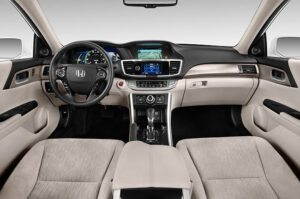
2014 Honda Accord Plug-In 4-Door Sedan Interior Detail
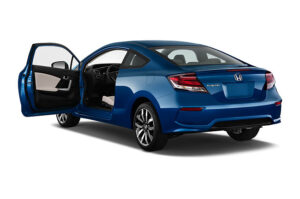
2015 Honda Civic Coupe EX-L Automatic 2-Door 3/4 Rear View In Studio
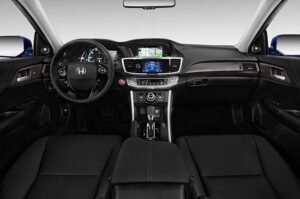
2014 Honda Accord Hybrid 4-Door Sedan Interior Detail

2011 Honda CRZ EX Sport Hybrid Coupe Black 3/4 Front View On White Seamless

2010 Honda Fit Sport Silver 3/4 Rear Studio
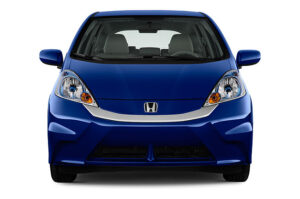
2014 Honda Fit EV 5-Door Hatchback Front View In Studio

2011 Honda CR-Z Black Detail On Road By Grassy Hillside

2000 Honda Civic Custom Blue

2015 Honda CR-V Touring 2WD 5-Door SUV Low 3/4 Front View In Studio

2010 Land Rover LR2 HSE Blue Profile View Studio
1957 Cadillac El Dorado Roadster Purple 3/4 Rear View White Seamless Studio

2011 Lexus GS Hybrid Black 3/4 Rear View On White Seamless

Peterbilt 2017 389 Silver 3/4 Front View
2003 Kenworth W900L Pearl White And Maroon With Cattle Carrier 3/4 Front View On Road By Orchard

1996 Kenworth W900L Blue With Pink Stripe 3/4 Front View On Road By Mountains

2005 Peterbilt 379 Blue And Black 3/4 Front View On Road By Autumn Trees

Peterbilt 1999 379 Purple 3/4 Front View by Building

2002 Peterbilt 379 Semi Black And Gray 3/4 Front View On Pavement By Ocean